
Shellabears Blog
Why Perth House Prices Keep Rising
|
Something I’ve been digging into over the past few weeks, some data from the ABS that I think tells a really important story about where the Perth property market has come from, and more importantly, where it’s heading.
I look at a lot of numbers in this job. But occasionally a set of figures stops you in your tracks. This is one of those times. Bear with me, it’s a longer newsletter!
The supply gap and how we got here
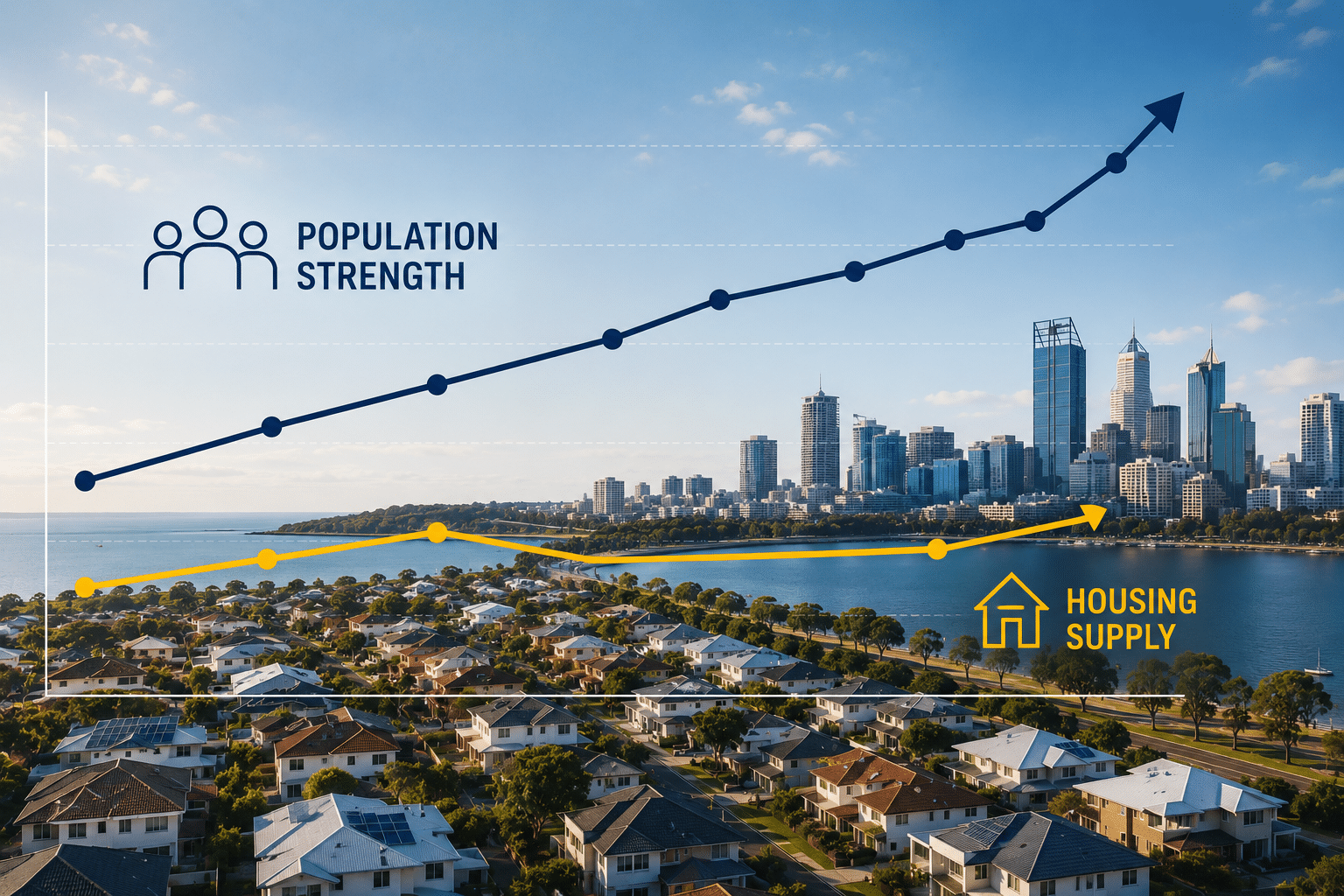
Australia-wide, building approvals peaked at around 221,000 new dwellings in 2020-21 and have been falling almost every year since. By 2023-24, that figure had dropped to around 163,000. Think of it like a tap being slowly turned off just as more people arrived at the sink.
In WA specifically, approvals fell from around 22,600 in 2021-22 to just 18,200 by 2023-24, a drop of nearly 20%. The good news is that 2025-26 data is tracking around 14% above last year, which is the strongest recovery of any state in the country. The building industry is finally responding. But this is the critical point, it’s responding to a problem that’s been building for years.
Population grew while building stalled
This is the part that really grabbed my attention.
At the exact moment builders were putting up fewer homes, WA was experiencing a population surge unlike anything we’d seen in years. Population growth hit 3.0% in 2022-23, the highest of any state in the country, and has barely eased since. To put that in perspective, WA was growing at nearly double the national average during the peak of the supply crunch.
The demand was there. The supply simply wasn’t.
The consequences are ones you’ll have felt directly, whether as a homeowner watching your property value climb, a renter facing brutal competition, or a buyer navigating a market with very little to choose from. Perth’s rental vacancy rate sat below 1% for two straight years.
Median rents surged and are nearly double since 2020. Median house prices also doubled and have pushed through $1m, outpacing every other Australian capital city.
How does WA compare to the east coast?
NSW and Victoria faced the same problem, falling approvals against surging population, but their situation was actually worse. Their approvals dropped nearly 30% from peak to trough, and their recovery is more tentative. Sydney and Melbourne have long relied on apartments to house people, and that pipeline has been paralysed by construction costs and builder insolvencies. Even when conditions improve it takes time to get moving. WA’s approvals recovery is running hotter than either state right now, though our new builds remain concentrated in outer growth corridors, well away from where demand pressure is most acute.
What this means for established property in established suburbs
The coastal suburbs are structurally different from the Perth market in aggregate. There is no greenfield land left. The only way to meaningfully add housing stock is through infill development, apartments, townhouses, higher-density projects. And that pipeline, particularly in inner coastal suburbs, is close to empty.
The supply constraints that have driven the price growth of the past three plus years aren’t going away anytime soon. If anything, they’re becoming more entrenched.
A softening in the broader market is possible as new completions flow through in 2026 and 2027. But a significant price correction? The data simply doesn’t support it, not with population growth still running above 2% annually and virtually no new supply coming into our specific patch.
The bottom line
Three plus years of underbuilding against one of the strongest population surges this state has ever seen has created a housing deficit with real staying power. The market has responded exactly as economics would predict, vacancy rates collapsed, rents surged, and prices climbed.
The tap is finally being turned back on, but the sink is a long way from full.
For those of you thinking about buying, selling, or simply understanding the value of what you own, the fundamentals that have driven Perth’s recent performance remain firmly in place.
As always, I’m happy to have a conversation about what any of this means for your specific situation, whether you’re thinking of making a move or just want to understand where things are headed. Feel free to call or reply to this email and we can find a time to chat.
7 Things I’m Watching
|
Government – Intervening as always! |
What’s happening Changes to the CGT Investment demand expected to focus on new developments Banks have removed negative gearing from the serviceability of funds available to borrow |
|
Interest Rates & Capital |
What’s happening Why it matters |
|
Population |
What’s happening Why it matters |
|
Employment |
What’s happening |
|
Building |
What’s happening |
|
Stock |
What’s happening |
|
Investment Properties |
What’s happening |